
Happy New Year! I hope 2025 is as kind to you as possible, and that you find what you’re looking for.
I published a new YouTube video at the very end of last year, called “How I created & published my new book (short fiction collection ‘Pick Your Potion’)“. You can watch it below, and there’s also a text-only version further down this page.
My new short fiction collection, Pick Your Potion, came out in September, and in the several months prior to that I was hard at work creating the paperback and ebook versions. I thought people might find it interesting or useful to know how I did that, and I’ll also want to look back on this when I’m publishing my next book, to remind myself what I did!
Knowing it’s time
- I keep a spreadsheet of how long all my stories are, so I knew when I’ve reached at least 60,000 words of uncollected stories.
- I like to wait until the 60,000 word mark so that the book is the size of a short novel, but you don’t have to. A lot of short fiction collections are shorter than that.
- I won’t be discussing the actual writing of the stories today, but I do have other videos for that. This one will be about creating the book itself, once the writing has been done.
Structuring the collection
- The first thing I do when I know what stories will be included in the collection, is that I figure out the order they’ll appear in.
- I write down each story on a scrap of paper or cardboard with its length and genre, because as a general rule I want to vary the genre and length of the stories so that there’s not two science fiction stories in a row, or two really short stories in a row, etc.
- I like to structure my collections so that there are six ‘tentpole’ stories – one at the very start and one at the very end, and then four fairly evenly spaced throughout the collection. These tend to be the strongest stories or the stories that have gotten the most recognition, like being shortlisted for an award. Once I’ve figured out the tentpole stories I fill in the rest of the story order.
Illustrations
- The tentpole stories are the ones I commission illustrations for. I contacted Margot Jenner, who I’ve worked with in the past, to see whether she was interested in doing some more illustrations for me. And luckily, she was.
- I sent Margot the relevant stories for her to read, plus some ideas I had about what each of the illustrations could look like, which was just a sentence or so each. I’m happy for her to draw her own conclusions from reading the stories.
- Margot sends me sketches to approve before she works on the final illustrations. I rarely have any tweaks that need to be made, but if there is anything, I can mention it at this stage.
- And then I get the finished versions!
- This whole process takes a few months, and I wanted to include the illustrations in the Advanced Reading Copies – or ARCs – that I’d be sending out, so I contacted Margot very quickly once I knew the collection was happening.
Timing
- Speaking of ARCs, I needed to check when I could contractually publish the collection and send out ARCs.
- Almost all of the stories in the collection have been published before in magazines, journals and anthologies, and a lot of them have exclusivity periods in the contracts. Those exclusivity periods might say, for example, that you can’t publish the story anywhere else until 12 months have passed from its original publication date.
- So I worked out when all of the exclusivity periods would end, and I knew that I couldn’t publish Pick Your Potion before that, so that gave me a pretty good idea of an approximate publication date.
- Ideally, I wanted to send out some review copies, or ARCs, before the publication date, so there were a couple of publishers who I reached out to and asked whether they would be happy for me to send out ARCs before the exclusivity period was officially over. And luckily for me, they said yes.
Interior File
- So with the illustrations in progress and the timing clear, the next step was for me to start work on the interior file. This is the part of the book between the front cover and the back cover – the pages of the book.
- I like to start with the paperback version, and I work in Microsoft Word to do it. It can be a little time-consuming to lay everything out myself, but I generally enjoy the process, with the exception of the headers which can get frustrating and finicky.
- Because almost all the stories had been published already in other publications, almost all of them had been professionally edited already, but I still needed to review all of the text to make sure no errors had snuck in via the process of copying the stories into the Word document.
- I won’t go into great detail about the process of laying everything out in Word, but aside from the headers, one particular thing I’d definitely recommend keeping in mind is the kerning. Kerning is the space between the individual letters on the page, and it can make a huge difference to the readability of the book and how professional it appears. You also want to pay attention to indentation, and when a paragraph should be indented versus when it should not.
- Once the illustrations have been added to the file, I also needed to check where any scene breaks fell on the page, and to add a symbol to scene breaks at the top or bottom of pages for clarity.
Cover
- I was also working on the cover during this time, which I made via Canva. Canva definitely has its limitations compared to something like Photoshop that I’ve used in the past, but I would use Canva again for relatively simple cover design.
- I drafted the front cover first, and then worked on the full cover once the interior file was more or less finalised, because the full cover’s size will differ depending on how many pages the book has. This is because of the thickness of the spine. If you’re using Ingram Spark like me, they will provide you with a different cover template depending on the size of your book and its number of pages.
- I went through a couple of iterations of the back cover summary, to make sure it wasn’t too long but still represented the book as well as possible.
- I also added two blurbs to the front cover once authors A.C. Wise and Maria Haskins had sent their blurbs to me, which were very generous and which I really appreciate.
IBSNs
- In order to set up the book on Ingram Spark and generate the full cover template, the book also needs to have an IBSN or International Standard Book Number, to identify the book as its own specific entity.
- I had purchased a bundle of IBSNs several years ago via Thorpe Bowker, so I just needed to log in to Thorpe Bowker and allocate one of my unused IBSNs to Pick Your Potion.
- The paperback and ebook versions of the book both needed their own ISBNs.
Proofs
- Once the interior file and the cover was looking pretty good, I ordered a bunch of paperback proofs from Ingram Spark.
- Once these arrived, I reviewed the paperback in detail to catch any final errors, and especially to catch any formatting issues that weren’t obvious in the digital file.
- I also used some of these proofs as paperback ARCs that I could mail out, so that several people could read and review the book prior to publication.
ePub
- Then it was time to do the epub, using the interior file of the paperback as a base. When shifting from paperback to epub, you don’t need to transfer across the headers.
- I create the epub file in Scrivener. This is not especially easy. If you have a Mac (I don’t) and you don’t mind paying for Vellum, I hear that’s excellent for ebook formatting, and is almost certainly easier.
- Creating the epub is my least favourite part of the entire publication process. I find it can be very frustrating because how the ebook looks in Scrivener can be so completely different to how the ebook will display on any random ereader.
- Three key tips for ebook creation:
- Some ereaders won’t recognise spaces between scenes, so make sure to add symbols between scene breaks so that all of the scenes don’t run together.
- Review your epub file on more than one ereader device or software, to make sure there aren’t any obvious issues displaying on one but not the other.
- If you’re using Scrivener and are having trouble getting italics or other formatting to appear in the epub file, make sure all your text is set to “No Style”.
And that’s how I created the paperback and ebook for Pick Your Potion! If you’re interested in a video on how I marketed the book, and what went well and not so well, please let me know and I will add that to my to-do list.
A final note:
My wife’s second novel, The Spirit Circle, is out today!
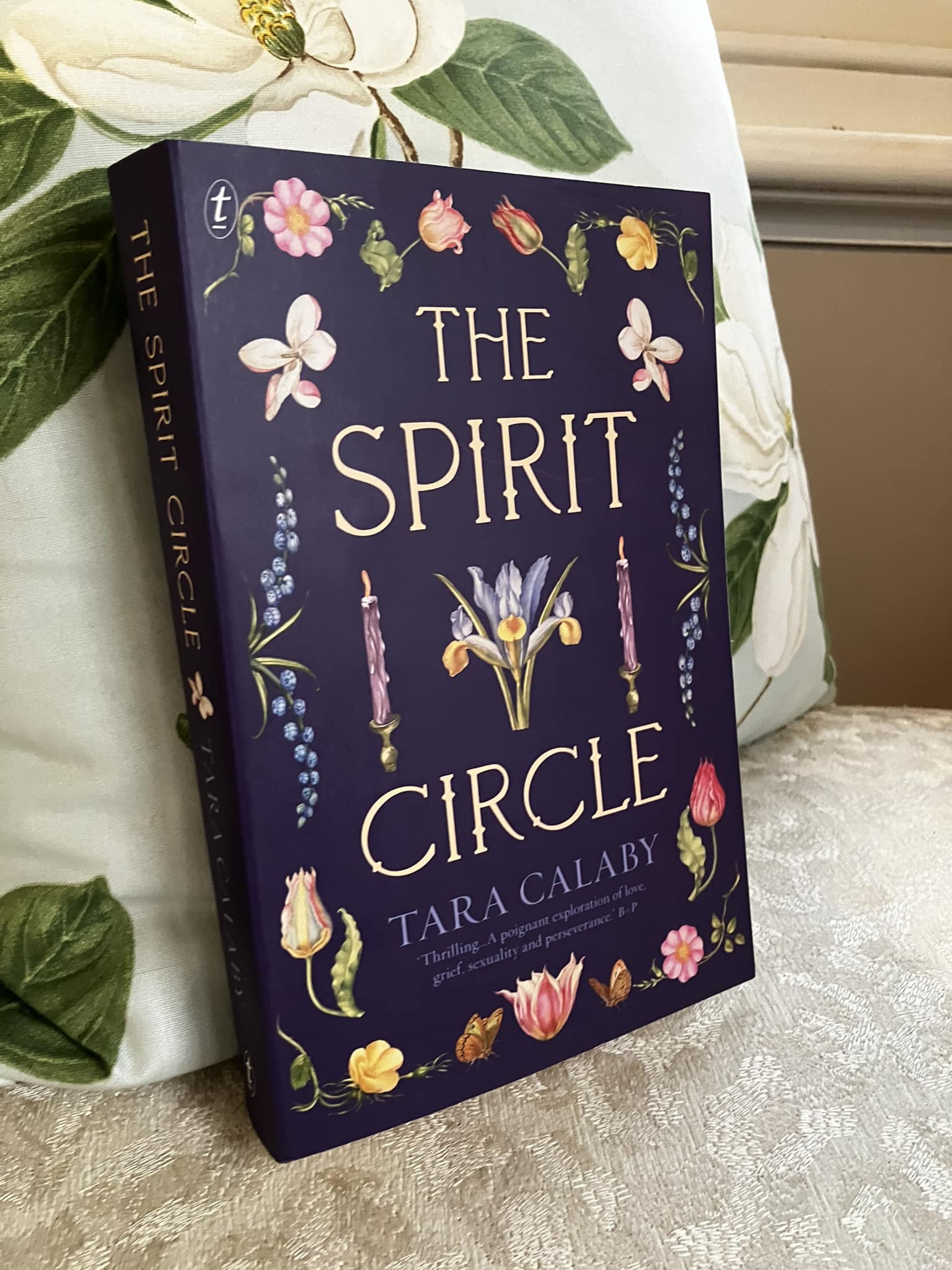
Tara describes it like this: “The Spirit Circle is set in 1888 Melbourne, and it’s about a young woman, Ellen, who joins a spiritualist group in the hope of revealing its lies to her best friend, who has been seduced by its promise of communication with the dead. Over time, Ellen’s initial scepticism begins to falter, and she is forced to face ghosts from her own past.”
It’s an absolutely brilliant book, and I hear it’s even featured in the latest print edition of Australian Vogue! We’re picking up our copy of Vogue tomorrow!
 Ephiny Gale